If you’re serving the insurance ecosystem, “trust us with your data” no longer works in RFPs. Carriers, brokers, and underwriters want continuous proof- not a single snapshot in time. While cyber insurance offsets financial loss after a breach, a SOC 2 Type II audit proves your security controls actively prevent those breaches day in and day out.
As a SOC 2 Type II readiness and compliance partner, we have found this approach to be particularly compelling for boards, CISOs, and procurement teams across the insurance sector.
What a SOC 2 Type II audit Actually Assesses
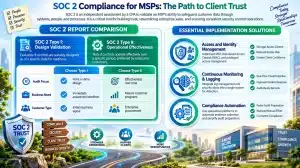
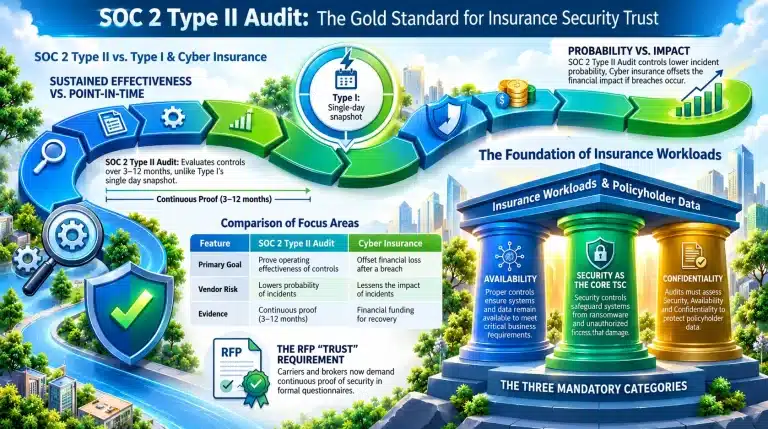
SOC 2 Type II evaluates the operating effectiveness of an organization’s security controls over a sustained testing window, typically 3 to 12 months. Security, Availability, and Confidentiality are mandatory audit categories. Privacy and Processing Integrity may also be included based on the organization’s services, customer requirements, and associated risks. SOC 2 type 2 audit shows the dedication of the organization towards protecting its data and reliability.
Related Read: The Complete SOC 2 Preparation Guide for Small Businesses in 2026
SOC 2 Type I vs. Type II: Why Insurance Buyers Prefer Type II
While SOC 2 Type Iis the assessment of the design of security controls at a specific point in time, SOC 2 Type II is the review of the operational effectiveness of the security controls over a period. Because of the proof of consistent implementation of key security controls, SOC 2 Type II is more favoured by insurance companies, business organizations, and regulators.
Security as the Foundation for Insurance Workloads
Security is the primary TSC, as it forms the basis of all other assurances. In the absence of security controls, both carriers and brokers will not be able to protect systems or data; this influences the following TSCs:
- Security (Common Criteria): Safeguards systems and data from any unauthorized physical and logical access. In case of the insurance industry, the system must have adequate security controls to safeguard against any credential compromise, ransomware, or misconfigurations leading to significant financial damage.
- Availability: Availability guarantees that all systems, applications, and operations data can operate effectively to meet the requirements of the business. Security concerns such as ransomware attacks and disruptions generally have a direct impact on availability, leading to costly downtime.
- Confidentiality: It ensures that private information such as information on policy holders, financial information, and even confidential information on the carrier is protected from any kind of unauthorized access. The security mechanisms are strong enough to prevent any data breach.
Through the inclusion of security at the center of insurance workloads, businesses secure sensitive resources, ensure continuous operations, and provide confidentiality for customers.
How SOC 2 Type II Complements Cyber Insurance
The cyber insurance and SOC 2 Type II answer different but related questions. The SOC 2 Type II addresses whether the design and operation of security and operational controls are good. The cyber insurance addresses what will happen financially if the security and operational controls fail to perform their functions and what kind of funding will be available for response, recovery, and third-party liability issues. For insurance companies assessing vendor risks, SOC 2 Type II lowers the probability of incidents via effective controls, while the cyber insurance lessens the impact if incidents happen.
IBN Tech’s SOC 2 Type II Approach for Insurance
We assist companies within the insurance value chain to be SOC 2 Type II ready in alignment with the requirements set forth by insurers, brokers, and their clients regarding security, operations, and regulations. Using readiness assessment and control optimization, we enhance critical aspects such as access management, incident handling, vendor management, and continuous monitoring.
As a trusted provider of SOC 2 audit services in India, we help organizations streamline compliance efforts and improve audit readiness. By integrating compliance and operational resilience, we can help our clients mitigate risks, establish trust, and turn SOC 2 Type II compliance into a competitive advantage.
When to Pursue SOC 2 Type II in Your Insurance Go‑to‑Market
Think of SOC 2 Type II if an enterprise carrier or broker asks for it in their RFPs or security questionnaire if you process NPI (Non-Public Personal Information) PII, PHI, or payment data, and policy/claims operations, if you want to distinguish yourself from other carriers that merely have policies or self-attestation or if your underwriters of cyber insurance require it.
Conclusion
If you are an insurance carrier, broker, or technology provider serving the insurance market, SOC 2 Type II is a strategic asset, not just a compliance exercise. As a SOC 2 auditor, we help you scope audits around real insurance use cases and data flows, design and test controls that align with carrier expectations and regulatory requirements and produce reports that streamline vendor due diligence and support cyber insurance discussions.
Need SOC 2 Compliance Services for your 2026 project?
Get a free consultation with our tech team — no commitment.
Frequently Asked Questions
Insurance carriers and brokers handle sensitive non-public information (NPI), personal health information, and financial data. SOC 2 Type II provides evidence that relevant controls operated effectively over a period of time, rather than providing only a point-in-time view of controls.
No. SOC 2 Type II can help organizations strengthen and demonstrate the effectiveness of their security controls, while cyber insurance provides financial protection against certain covered losses resulting from security incidents or business interruptions. They serve different purposes.
The timeline varies depending on the organization's size, existing controls, scope, and readiness. Preparation and remediation may take 1 to 3 months, while the Type II audit period commonly lasts 3 to 12 months. Some companies pursue a Type I examination first to demonstrate initial control readiness before completing Type II.