Cyber-attacks on the external network components of an organization are always on the rise due to the growing digitization of processes. Organizations are constantly being attacked by hackers seeking to find any vulnerabilities within the systems that are publicly exposed, including web servers, VPN gateways, APIs, and firewall systems. External Network Penetration Testing is extremely important to detect any existing vulnerabilities and take measures to counteract them before they could be exploited.
What is External Network Penetration Testing?
External Penetration Testing is carried out in a realistic way where a simulated attack is performed by an attacker who doesn’t have any prior knowledge about your internal infrastructure. The main goal of performing an external penetration test is to find out how well your internet-connected assets such as web servers, firewalls, routers, VPN gateways, APIs, and DNS systems resist a cyber-attack.
Ethical hackers will perform the task in the same way as threat actors will perform it while trying to find vulnerabilities and weaknesses in your organization’s network architecture.
5 Key Phases of an External Pentest
Ethical hackers operate in an organized, systematic process to conduct an exhaustive mapping and testing of your attack surface.
- Scoping andPre-Engagement
The terms of engagement are established even before the tests are carried out. This entails defining what IP addresses, domains and applications are included in the test; authorization; and scheduling of activities so as not to disrupt business processes.
- Reconnaissance (OSINT)
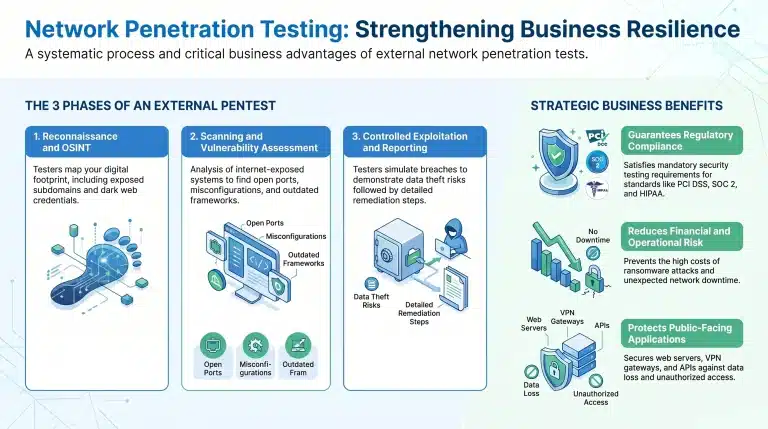
Passive and active OSINT collection is carried out by the testers. This entails the mapping of the digital footprint of your organization, including any information, credentials, which may be available on the dark web, any exposed subdomains, open ports and employee information that could help them carry out the attack.
- Scanning and Vulnerability Assessment
By utilizing various tools including Nmap or Nessus along with the manual assessment, your internet exposed systems will be analyzed to find open ports and misconfigurations, vulnerabilities and outdated frameworks.
- Controlled Exploitation
It is at this point that one can truly see the benefits of a pentest. The testers seek to break through firewalls, hack into weak or default administrator passwords, and use software flaws. Once inside, they show what could happen, such as theft of sensitive data or access to the internal network.
- Reporting and Remediation Recommendations
The last deliverable is an in-depth technical report. This report provides details on how the vulnerabilities were detected, exploited, a matrix of risk (Critical, High, Medium, Low), and steps for fixing the issue.
Business Benefits: Why Proactive Testing Matters
There are a lot of benefits linked to routine external pentests that go beyond the mere technical side:
- Protect Public-Facing Applications: Helps ensure safety of publicly accessible web applications against any data breach or data loss.
- Guarantees Compliance: Satisfies mandatory requirements of security testing to meet compliance standards like PCI DSS, SOC 2, ISO 27001, HIPAA.
- Reduces Financial Risks and Downtimes: Provides effective ways that are much less costly than dealing with an aftermath of a ransomware attack or unexpected network downtime.
- Builds Customer Loyalty: Demonstrates commitment towards security practices using offensive security management approach..
Conclusion
Nowadays, External Network Penetration Testing cannot be considered optional anymore, it must be an integral part of proactive cybersecurity efforts. Using penetration tests, it is possible to find any gaps in the system and eliminate them before real hackers make use of them.
Not only can you protect yourself this way from any cyber threats and comply with regulations, but using our step-by-step approach will decrease financial risks and preserve the reputation of your company by working together with IBN Technologies.
FAQs
Q1: How often should our business conduct an external penetration test?
The absolute minimum requirement is that businesses should conduct an external pentest once per year. But there should be additional triggers for the test depending on whether you made substantial changes to your network, installed new public facing applications, or modified any infrastructure.
Q2: Will an external pentest disrupt our daily business operations?
No. It is during the scoping process that ethical hackers lay out their rules of engagement and set up a schedule for exploiting vulnerabilities in order to reflect an actual attack scenario without creating any downtime.
Q3: What is the difference between a vulnerability scan and a penetration test?
A vulnerability scan uses automated tools to identify possible software vulnerabilities that exist theoretically while penetration testing verifies them by means of human skills and techniques.