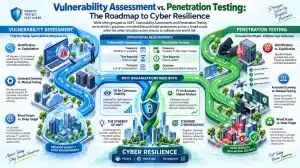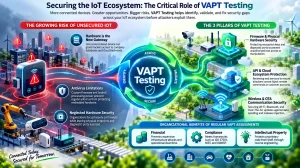
Before accepting the proposal for a VAPT, ask yourself whether this assessment is going to increase the security of your business or just add one more report to the list.
It often happens that businesses concentrate on price, delivery period, and number of tools used to carry out VAPT and find out afterwards that some significant weaknesses have remained uncovered. Selecting a reliable VAPT company in India is all about lowering risks and increasing resilience.
Let’s break this down into 12 practical factors so you can evaluate vendors with confidence instead of just comparing price quotes and tool lists.
- Be Clear About What You Want Tested
Before you even speak to vendors, spend some time internally on scope.
Ask yourself:
- Which assets matter most: web apps, mobile apps, APIs, cloud environments, internal networks, or all of the above?
- Are there any compliance drivers: SOC 2, ISO 27001, PCI DSS, RBI/SEBI guidelines, or customer mandates?
When you go to market with a clear scope, conversations with VAPT providers become sharper, and quotes more comparable. A good company will still challenge and refine your scope, but they should not be guessing it for you.
- Look for Real‑World Experience, Not Just Service Listings
Most security companies list “web, mobile, network VAPT” on their website. The real question is: in what kind of environments have they actually worked?
Consider:
- Have they handled production‑grade systems—SaaS platforms, fintech apps, multi‑tenant environments, legacy ERP, or hybrid cloud setups?
- Do they share case studies showing they’ve found meaningful vulnerabilities, not just patched minor misconfigurations?
Real‑world experience shows up in how they talk about risk: they’ll connect technical issues to business impact, data exposure, fraud risk, downtime, regulatory penalties—rather than just rattling off CVE IDs.
- Check the Skills and Certifications of the Testing Team
You’re not just hiring a company; you’re hiring the people who will attempt to ethically break into your systems.
Ask about:
- Individual certifications: OSCP, OSWE, CEH, GIAC (GPEN, GWAPT), CISSP, etc.
- Skill mix: application security, network security, cloud security, secure code review, and API security.
While certifications aren’t everything, they indicate that one is aware of rigorous training and real-world attack scenarios. Usually, a good team profile goes hand-in-hand with deep analysis and reduced false positives.
- Understand Their Methodology and Use of Standards
A mature VAPT provider will be transparent about how they test. You want structured, repeatable processes—not improvised poking around.
Look for references to:
- OWASP Testing Guide and OWASP Top 10 for web and API security.
- PTES (Penetration Testing Execution Standard) or NIST‑aligned approaches for overall pentesting structure.
Methodology matters because it ensures coverage: even if individual testers change, your organization gets a consistent level of testing instead of a personality‑dependent exercise.
- Ask How They Balance Automated and Manual Testing
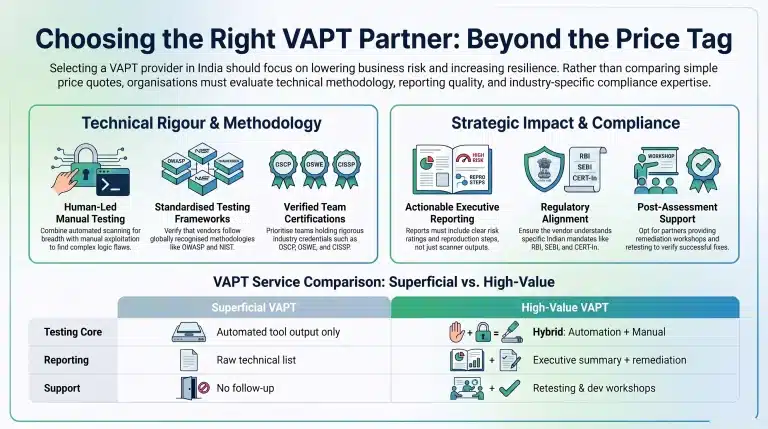
Tools are great at wide coverage: they can sweep through thousands of URLs and configurations quickly. But they’re notoriously weak at spotting business logic flaws—things like abuse of workflows, privilege abuse, and complex chained attacks.
Make sure the provider:
- Use trusted tools for baseline scanning, patch checks, and common vulnerabilities.
- Layer manual exploitation attempts on top—trying to chain issues, bypass logic, and demonstrate real impact.
The best reports typically come from hybrid work: automation for breadth, manual testing for depth, and proof‑of‑concept exploits for critical findings.
- Evaluate the Quality of Their Reports
Reports are where VAPT goes from “exercise done” to “change can actually happen.” Poor reporting is one of the biggest complaints teams have after hiring the wrong vendor.
A strong report usually includes:
- A clear executive summary that non‑technical leaders can understand: risk rating, key themes, and what changed.
- Detailed technical sections with reproduction steps, payloads, screenshots, and context.
- Prioritized remediation guidance: what to fix first, suggested approaches, and any quick wins.
If you’ve ever received a raw scanner output as a “VAPT report”, you know how unusable that is. Don’t hesitate to ask for sample/masked reports before signing.
- Check Their Awareness of Regulatory and Compliance Requirements
If your business falls under BFSI, Fintech, SaaS, Healthcare, or any other regulated industry, then the VAPT vendor needs to be well versed not just in OWASP but in your compliance requirements as well.
It will make sense to choose someone who is comfortable with:
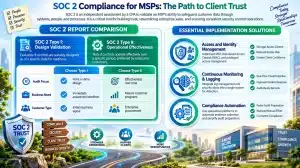
- SOC 2 – particularly when it comes to the controls surrounding Vulnerability Management, Change Management, and Logical Access.
- ISO 27001 – the essential Annex A controls relevant to Secure Development and periodic technical assessments.
- RBI, SEBI, CERT In or industry specific cyber guidelines that shape your compliance obligations.
Such expertise ensures that the VAPT process does not remain an isolated activity.
- ClarifyPost‑TestSupport and Retesting
A VAPT that ends with “Here’s your report, good luck” isn’t very helpful. The real work begins after findings are identified.
Ask vendors:
- Do they conduct walkthrough sessions or remediation workshops with dev/infra teams?
- Is retesting included to verify that fixes actually close the vulnerabilities?
- Do they provide best‑practice guidance for secure coding, configurations, and DevSecOps integration?
This post‑test collaboration often determines whether your risk level meaningfully reduces or just looks good in documentation.
- Ask About Industry Experience and References
India has many VAPT providers, but not all are equally familiar with every sector.
Consider:
- Do they have experience in your domain: fintech/NBFCs, stockbroking, SaaS, e‑commerce, healthcare, manufacturing, public sector, etc.?
- Can they share anonymized case studies or references from organizations with similar scale and complexity?
If a vendor understands your industry, then they understand the common vulnerabilities, regulatory requirements, and risk appetite—which leads to more relevant assessments and recommendations.
- Examine Pricing, Engagement Model, and Transparency
The VAPT pricing in India can be surprisingly low or surprisingly high. It all depends on how much you know about what you’re getting.
Pay attention to:
- Pricing model: per asset, per application, per man‑day, fixed project fee, or managed service.
- What’s included: number of tests, retests, report format, support hours, and whether there are limits on findings or scope.
- Hidden constraints: for example, “basic” vs “advanced” testing that silently downgrades coverage.
It’s better to pay a fair amount for thorough testing than save money on a superficial engagement that leaves critical gaps—and still costs you later via incidents or failed audits.
- Confirm Security, Confidentiality, and Legal Readiness
You are giving outsiders permission to try breaking into systems that run your business. Strong legal and confidentiality practices are non‑negotiable.
Check for:
- Proper NDAs, commitment to data management, and explicit log, screenshot, and result management policies.
- Rules of engagement (ROE): testing windows, production impact policies, emergency rollback procedures.
- Professional behavior and liability sections: what will happen in case of trouble?
This is especially important for businesses dealing with sensitive financial, health, or personal data where testing must be controlled and accountable.
- Think Beyond One‑Off VAPT: Is This a Long‑Term Partner?
Security is not a “once in a year” activity anymore. As your infrastructure evolves—new releases, new APIs, cloud migrations—your attack surface changes constantly.
Look for vendors who:
- Support periodic VAPT cycles: pre‑release testing, major change testing, and annual assessments.
- Offer adjacent services: security architecture assessment, configuration assessment, or security monitoring.
- Have a desire to help you shift from remediation to proactive security by design.
Good partners will evolve together with you, evolving their testing approach based on changes in your stack and threats.
Conclusion
Understanding how to choose the best VAPT company in India is essential for protecting your organization’s critical assets. The right partner will not just identify vulnerabilities. They will also provide expert guidance, useful recommendations, full testing coverage, and security services.
From evaluating a CERT-In empanelled VAPT company to gaging knowledge in web application security testing, API security testing, network penetration testing, and cloud security assessment, every factor plays a critical role in making the right decision.
If you’re looking for a trusted cybersecurity partner, IBN Technologies provides comprehensive VAPT services in India designed to help organizations strengthen security, maintain compliance, and reduce cyber threat with confidence.
Need VAPT Services for your 2026 project?
Get a free consultation with our tech team — no commitment.
Frequently Asked Questions
VAPT refers to the security test which checks and confirms security vulnerabilities on applications, networks, APIs and IT infrastructure of the business. It is an essential security measure as it protects businesses from attacks and helps secure sensitive data.
The main considerations include CERT-In empanelment, certified security professionals, manual testing capabilities, experience in the industry, testing capabilities and remediation.
CERT-In empanelled VAPT companies have complied with certain cybersecurity audit requirements laid down by India's national cybersecurity agency. This could help especially those working in regulated industries such as finance, fintech, health and government agencies.
Web application security testing, API security testing, network penetration testing, mobile application penetration testing, cloud security assessment, vulnerability assessment and remediation are key services.