Nowadays, mobile applications have become a crucial part of our daily lives, powering communication, banking, shopping, and entertainment. However, as trust on mobile apps grows, so does their appeal to cybercriminals. This makes Mobile App VAPT crucial for identifying security weaknesses, vulnerabilities, and potential attack points before they can be exploited.
In this blog, we will discuss the importance of Mobile Application VAPT, along with the key methodologies and best practices for securing mobile applications.
What Is Mobile App VAPT?
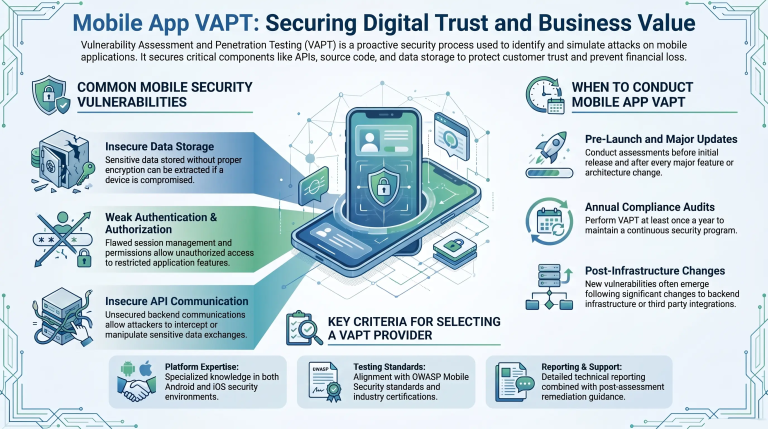
Vulnerability Assessment and Penetration Testing (VAPT) is a proactive security testing process that helps identify and assess vulnerabilities within a mobile application before they can be exploited by attackers. While a vulnerability assessment focuses on discovering potential security gaps, penetration testing goes a step further by simulating real-world attack scenarios to evaluate their actual impact.
For mobile applications, VAPT examines multiple components of the security ecosystem, including – Application source code, APIs and backend services, Authentication mechanisms, Data storage practices, Network communications, Device permissions and Third-party integrations.
The primary goal of Mobile Application VAPT is to uncover security risks early, helping organizations strengthen their Android and iOS applications before cybercriminals can take advantage of them.
Why Mobile App Security Is More Important Today?
Mobile applications handle a vast amount of sensitive information, from customer credentials and payment details to healthcare records and business data. This makes them an attractive target for cybercriminals looking to steal valuable information or disrupt operations. While many organizations focus on delivering seamless functionality and user experiences, security is often overlooked during development, leaving hidden vulnerabilities that can go unnoticed until a security incident occurs.
The impact of a compromised mobile application can be significant, leading to data breaches, financial losses, compliance violations, reputational damage, and a loss of customer trust. In some cases, security flaws can even result in service disruptions that affect business continuity. This is why Mobile Application VAPT is essential. By proactively identifying and addressing security weaknesses, organizations can reduce risk, strengthen their security posture, and protect both their business and users from evolving cyber threats.
Common Security Vulnerabilities in Mobile Applications
Every mobile application has a unique architecture and functionality, but certain security vulnerabilities are commonly found across both Android and iOS platforms. Understanding these risks is the first step toward building a more secure application and reducing the chances of a successful cyberattack.
- Insecure Data Storage
Many mobile applications store sensitive information such as passwords, authentication tokens, and personal data on the device. When this data is not properly encrypted or secured, attackers who gain access to the device can extract and misuse the information.
- Weak Authentication and Authorization
Authentication and access controls are critical to application security. Weak password policies, insecure session management, or improperly configured user permissions can allow unauthorized individuals to access sensitive data and restricted application features.
- Insecure API Communication
Mobile applications constantly communicate with backend servers through APIs. If these communications are not properly secured, attackers may intercept, manipulate, or gain unauthorized access to sensitive data being exchanged between the application and the server.
- Improper Certificate Validation
Applications that do not correctly validate SSL/TLS certificates are vulnerable to Man-in-the-Middle (MITM) attacks. This can enable attackers to intercept network traffic and access confidential information transmitted through the application.
- Reverse Engineering Risks
Without sufficient code protection and application hardening measures, mobile apps can be reverse engineered by attackers. This may expose business logic, API keys, sensitive configurations, or hidden vulnerabilities that can later be exploited.
- Insecure Third-Party Components
Most modern applications rely on third-party libraries, frameworks, and SDKs to accelerate development. However, outdated or vulnerable components can introduce security weaknesses into the application and create additional attack vectors for cybercriminals.
By identifying these vulnerabilities early through Mobile Application VAPT, organizations can strengthen their security posture, minimize business risk, and ensure a safer experience for their users.
How Often Should Mobile Apps Undergo VAPT?
Mobile application security is an ongoing process, not a one-time activity. As applications evolve through feature updates, infrastructure changes, and third-party integrations, new vulnerabilities can be introduced. To maintain a strong security posture, organizations should conduct VAPT:
- Before launching a new application
- After major application updates or feature releases
- Following infrastructure or architecture changes
- During compliance and security audits
- At least once a year as part of a continuous security program
Regular assessments ensure that security keeps pace with both technological changes and the evolving threat landscape.
Choosing the Right Mobile Application VAPT Provider
The effectiveness of a VAPT assessment largely depends on the expertise of the security provider. When selecting a Mobile Application VAPT partner, organizations should look for:
- Experience in Android and iOS security testing
- Relevant industry certifications and credentials
- Expertise in OWASP Mobile Security standards
- Detailed technical and executive-level reporting
- A combination of manual and automated testing approaches
- Remediation support and post-assessment guidance
A trusted VAPT provider does more than identify vulnerabilities. They help organizations understand risks, prioritize fixes, and build a stronger security foundation for their mobile applications.
Need VAPT Services for your 2026 project?
Get a free consultation with our tech team — no commitment.
Final Thoughts
Mobile applications have become a critical part of modern business operations, making security more important than ever. As cyber threats continue to target Android and iOS applications, organizations must take a proactive approach to identifying and addressing security risks.
Mobile Application VAPT Services help businesses uncover vulnerabilities, validate security controls, and reduce the likelihood of cyberattacks before they can impact operations. Whether you’re launching a new mobile application or managing an existing one, regular VAPT assessments can help protect sensitive data, maintain customer trust, support compliance efforts, and strengthen long-term business resilience.